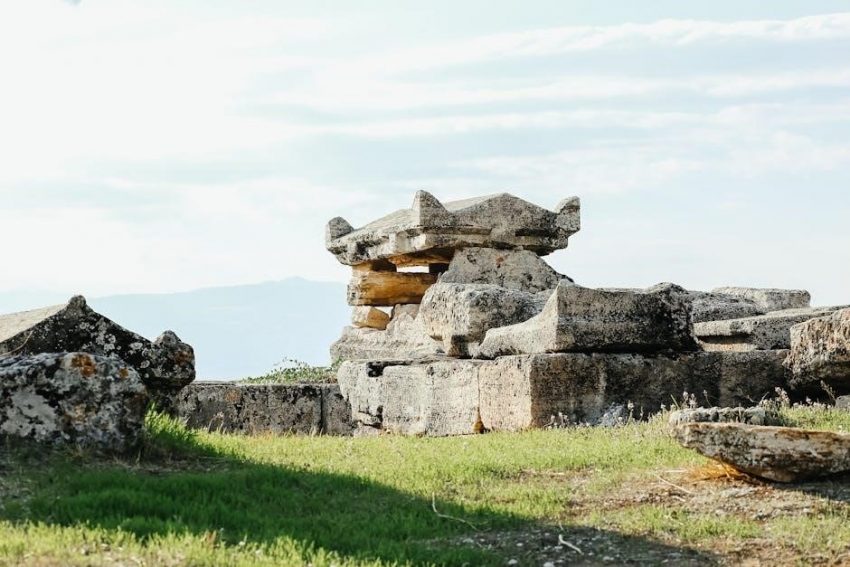
The Land of Open Graves: A Comprehensive Overview
Jason de Leon’s impactful work‚ including the “Land of Open Graves” PDF‚ is gaining academic attention‚ with reviews and scholarly articles emerging.
Currently‚ the PDF has no ratings‚ but resources from M. Hotopp-Riecke and A. Papushina offer insights into the book’s themes.
Jason de Leon is a prominent anthropologist whose research profoundly investigates the human consequences of border enforcement policies. His work‚ particularly exemplified in “The Land of Open Graves‚” meticulously documents the experiences of migrants traversing the harsh landscapes of the US-Mexico border. The availability of the book as a PDF facilitates wider access to these critical findings.
De Leon’s methodology uniquely blends ethnographic fieldwork with forensic archaeology‚ allowing him to uncover the stories embedded within the discarded belongings of migrants. Resources like those compiled by M. Hotopp-Riecke and A. Papushina highlight the significance of his contributions. The PDF version allows for detailed study of his research‚ currently lacking formal ratings but gaining traction within academic circles.
The Central Argument of “The Land of Open Graves”
“The Land of Open Graves” argues that contemporary border enforcement‚ specifically the strategy of “Prevention Through Deterrence‚” doesn’t deter migration but rather pushes it into increasingly dangerous and remote areas. This policy directly contributes to a humanitarian crisis‚ resulting in preventable deaths and disappearances. Accessing the book as a PDF allows for focused examination of this central claim.
De Leon demonstrates this through detailed archaeological analysis of migrant remains and discarded possessions. The PDF format enables researchers‚ as noted in materials by M. Hotopp-Riecke and A. Papushina‚ to closely study the material evidence supporting his argument. Currently without ratings‚ the PDF’s accessibility is crucial for understanding the ethical implications of border policies.
The Border Landscape as an Archaeological Site
De Leon utilizes forensic archaeology‚ examining the “Land of Open Graves” PDF’s evidence of material culture to understand migrant experiences and border violence.
Forensic Archaeology and the US-Mexico Border
Jason de Leon’s work‚ detailed within the “Land of Open Graves” PDF‚ pioneers the application of forensic archaeology to the US-Mexico border region. This approach moves beyond traditional archaeological methods to address a contemporary humanitarian crisis.
He meticulously documents and analyzes the discarded belongings of migrants – a material record of their journeys and struggles. This isn’t simply about recovering artifacts; it’s about reconstructing narratives of suffering and loss. The PDF showcases how these archaeological investigations contribute to understanding the causes and consequences of migrant deaths.
By treating the border landscape as a crime scene‚ de Leon’s research provides crucial evidence for human rights advocacy and challenges dominant narratives surrounding border security.
Material Culture of Migration
Jason de Leon’s “Land of Open Graves” PDF profoundly examines the material culture left behind by migrants traversing the US-Mexico border. These aren’t merely lost possessions‚ but poignant remnants of arduous journeys and desperate hopes.
The study details how items like water bottles‚ backpacks‚ clothing‚ and personal documents become powerful archaeological evidence. Each object tells a story – of resilience‚ hardship‚ and the risks undertaken in pursuit of a better life. Analyzing this material culture provides insights into migration routes‚ survival strategies‚ and the physical toll exacted by the harsh desert environment.
De Leon’s work elevates these discarded items to a level of significance‚ forcing a confrontation with the human cost of border enforcement.
The Role of Objects Left Behind
Jason de Leon’s research‚ detailed within the “Land of Open Graves” PDF‚ highlights how discarded objects function as silent witnesses to the migrant experience. These aren’t simply lost items; they represent fragments of lives interrupted and journeys fraught with peril.
The book emphasizes that analyzing these remnants – water containers‚ worn shoes‚ identification cards – offers crucial insights into the motivations‚ routes‚ and struggles of those attempting to cross the border. They become proxies for the missing‚ allowing for a reconstruction of narratives often silenced by policy and distance.
These objects demand recognition of the human stories embedded within them.

The Human Cost of Border Enforcement
“The Land of Open Graves” PDF details the devastating consequences of border policies‚ specifically dehydration‚ exposure‚ and the tragic disappearances of migrants.
Dehydration and Exposure as Causes of Death
Jason de Leon’s “The Land of Open Graves‚” accessible as a PDF‚ meticulously documents how harsh environmental conditions become direct agents of mortality for migrants. The book reveals that dehydration and exposure are tragically common causes of death along the US-Mexico border.
This isn’t accidental; it’s a consequence of “Prevention Through Deterrence” strategies‚ pushing migrants into increasingly remote and dangerous terrain; The PDF implicitly argues that policy choices directly contribute to these preventable deaths. The recovered remains‚ analyzed within the book‚ often bear the stark evidence of these struggles – skeletal remains found in areas lacking water sources‚ and bodies showing signs of extreme temperature exposure.
The Impact of “Prevention Through Deterrence”
Jason de Leon’s “The Land of Open Graves‚” available as a PDF‚ critically examines the devastating consequences of the “Prevention Through Deterrence” policy. This strategy intentionally directs migrants towards increasingly perilous routes‚ assuming the risk of crossing will deter them.
However‚ the PDF demonstrates this policy doesn’t deter‚ but rather displaces death. Migrants are forced into harsher environments – deserts and mountains – leading to increased rates of dehydration‚ exposure‚ and ultimately‚ fatalities. The archaeological evidence presented within the book directly links policy to mortality‚ showcasing how intentional deterrence creates a humanitarian crisis. The book’s findings challenge the ethical foundations of this border enforcement approach.
The Disappearance of Migrants
Jason de Leon’s “The Land of Open Graves‚” accessible as a PDF‚ powerfully addresses the widespread phenomenon of migrant disappearances along the US-Mexico border. The book details how the border landscape itself actively contributes to these vanishings‚ swallowing individuals whole.
The PDF reveals that many disappearances aren’t simply cases of getting lost; they are a direct result of the harsh terrain and the deliberate strategies of border enforcement. Remains are often fragmented and scattered‚ making identification incredibly difficult. Families are left in agonizing uncertainty‚ lacking closure and answers. De Leon’s work‚ through archaeological evidence‚ gives voice to these silent tragedies and highlights the human cost of border policies.
Analyzing Burial Sites and Remains
“The Land of Open Graves” PDF details the immense challenges in identifying migrant remains‚ utilizing forensic anthropology and examining associated “grave goods.”
The Challenges of Identifying Remains
Jason de Leon’s “The Land of Open Graves”‚ accessible as a PDF‚ profoundly illustrates the difficulties inherent in identifying human remains found along the US-Mexico border. The extreme environmental conditions accelerate decomposition‚ hindering traditional identification methods.
Furthermore‚ migrants often lack identification documents‚ and many are deliberately stripped of such items during their journey. The sheer scale of disappearances overwhelms existing forensic resources. Establishing a positive identification becomes exceptionally complex‚ requiring advanced forensic anthropology techniques and‚ often‚ relying on fragmentary skeletal remains or associated personal belongings detailed within the PDF.
The book highlights how this lack of identification perpetuates the tragedy‚ leaving families in agonizing uncertainty.
The Use of Forensic Anthropology
Jason de Leon’s “The Land of Open Graves‚” available as a PDF‚ emphasizes the crucial role of forensic anthropology in addressing the humanitarian crisis at the US-Mexico border. Analyzing skeletal remains‚ even fragmented ones‚ provides vital clues about age‚ sex‚ ancestry‚ and potential causes of death.
Forensic anthropologists work to reconstruct biological profiles and identify potential trauma‚ contributing to the process of identification. The book details how these specialists collaborate with archaeologists to meticulously excavate and document burial sites.
The PDF implicitly underscores the ethical considerations surrounding the respectful treatment of remains and the importance of collaboration with families seeking answers.
The Significance of Grave Goods
While “The Land of Open Graves‚” accessible as a PDF‚ primarily focuses on human remains‚ the concept of “grave goods” – objects buried with the deceased – resonates with its core themes. Though not traditional grave goods‚ the personal belongings left behind by migrants—water bottles‚ identification‚ clothing—function similarly.
These items‚ detailed within the PDF’s scope‚ offer poignant insights into the lives‚ journeys‚ and hopes of those who perished. They represent a material culture of migration‚ revealing strategies for survival and the desperation of the border crossing.
Analyzing these objects provides a powerful‚ humanizing counterpoint to the statistics of border deaths.
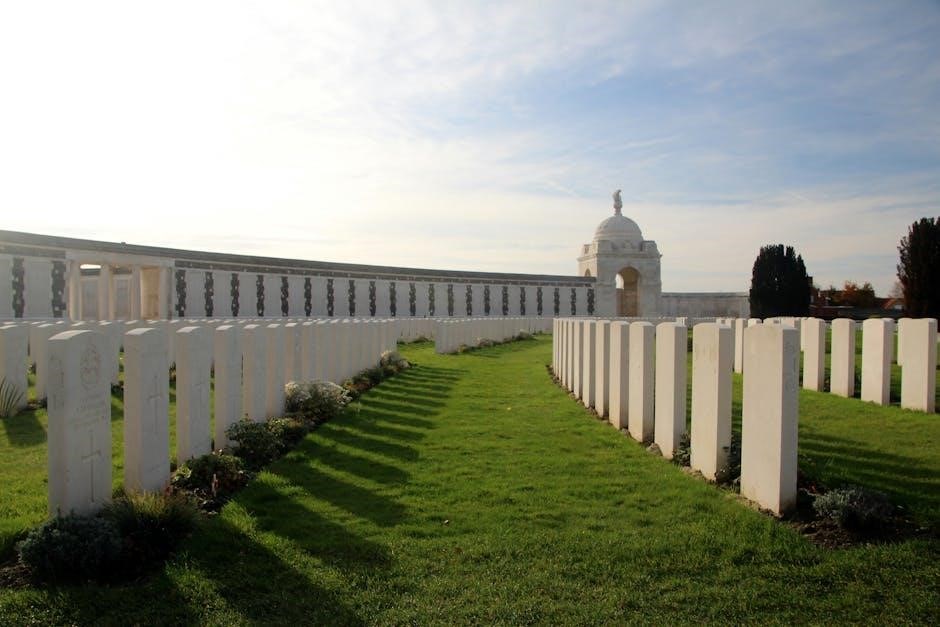
Historical Context: Tatar Graves in Middle Germany
“The Land of Open Graves” PDF draws parallels to historical archaeological analysis‚ specifically Tatar burial sites in Middle Germany‚ examining continuity between cultures.
Archaeological Analysis of Tatar Burial Sites
Archaeological investigations of Tatar graves in Middle Germany‚ as detailed in related scholarly work accessible through resources like the “Land of Open Graves” PDF‚ reveal fascinating insights into past populations.
Extensive source analysis informs understanding of these sites‚ prompting questions about burial practices. Specifically‚ the filling materials within the graves – river stone‚ sand‚ and soil – are a central focus of inquiry.
Researchers are actively exploring why some graves were filled with these materials‚ a question that remains open for debate. This analysis seeks to establish potential cultural or ritualistic significance‚ mirroring the detailed examination of remains found along the US-Mexico border.
Continuity Between Savirs and Tatar Cultures
Archaeological evidence suggests a potential line of continuity between the Savirs – an earlier ethnic group – and the Tatar cultures inhabiting Middle Germany‚ a topic explored in research related to materials like the “Land of Open Graves” PDF.
This connection is investigated through analysis of burial sites and associated artifacts‚ seeking patterns that indicate cultural transmission or shared practices. The examination of grave goods and burial orientations provides crucial data.
Understanding this potential link contributes to a broader understanding of migration patterns and cultural exchange in the region‚ echoing the borderland studies detailed within the referenced work.
The Question of Filling Materials in Graves
A persistent question in the archaeological analysis of Tatar graves‚ and relevant to broader studies like those informed by the “Land of Open Graves” PDF‚ concerns the varying materials used to fill the graves themselves.
While some graves are filled with river stone‚ others contain sand and soil‚ prompting investigation into the reasons behind these differences. This isn’t simply a matter of available resources; the deliberate choice of filling material likely held symbolic or practical significance.
Determining the rationale behind these choices remains an open question‚ requiring further research and contextual analysis.

Funeral Reform and the Russian Civil War
“Land of Open Graves” PDF details the materiality of death during conflict‚ documenting burial practices and reforms enacted throughout the tumultuous Russian Civil War period.
Materiality of Death During Conflict
Jason de Leon’s research‚ accessible through the “Land of Open Graves” PDF‚ profoundly examines how death is materially experienced and represented during times of intense social upheaval. The documentation within the PDF reveals how burial practices become intrinsically linked to broader political and social contexts‚ particularly during the Russian Civil War.
Specifically‚ the study highlights how the very act of burying the dead – the selection of grave goods‚ the methods of interment‚ and the physical landscape of burial sites – served as a means of asserting control‚ expressing ideology‚ and negotiating loss. The PDF demonstrates that even in the chaos of war‚ death is not simply a biological event‚ but a culturally constructed one‚ deeply embedded in material culture.
Documenting Burial Practices
Jason de Leon’s “Land of Open Graves” PDF meticulously details the importance of documenting burial practices as a crucial element in understanding broader historical and social processes. The research‚ as presented in the PDF‚ emphasizes a systematic approach to recording the physical characteristics of burial sites‚ including grave dimensions‚ orientation‚ and associated artifacts.
This documentation extends beyond mere description‚ encompassing a careful analysis of the materials used in interment and the spatial relationships between graves. The PDF illustrates how such detailed records provide invaluable insights into the beliefs‚ rituals‚ and social structures of past communities‚ particularly during periods of conflict like the Russian Civil War‚ offering a tangible link to the deceased.
Spitzbergen: A Related Geographical Study
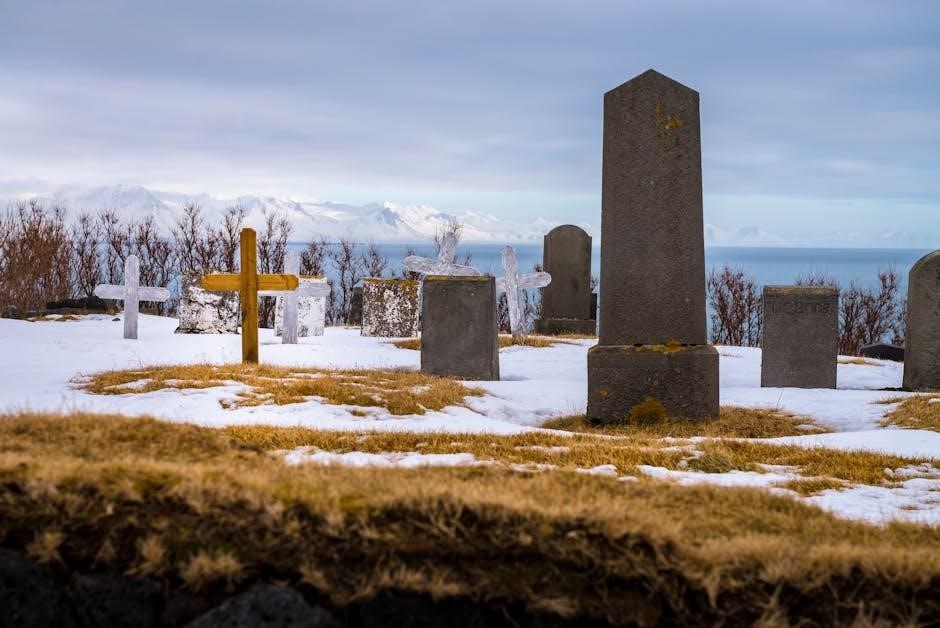
“The Land of Open Graves” PDF connects to the “Different Land” project in Spitzbergen‚ a sixth edition study exploring related geographical and anthropological themes.
The “Different Land” Project
The “Different Land” project‚ within which the Spitzbergen research is framed‚ offers a compelling parallel to Jason de Leon’s “Land of Open Graves” PDF investigation.
This ongoing‚ sixth edition study explores themes of death‚ materiality‚ and landscape in a geographically distinct‚ yet conceptually resonant‚ context. The project’s scope extends beyond simple documentation‚ aiming to understand how environments shape human experiences surrounding mortality.
Similar to de Leon’s work focusing on the US-Mexico border‚ “Different Land” examines how specific landscapes – in this case‚ the Arctic – influence burial practices and the treatment of remains. The project’s findings contribute to a broader understanding of how humans interact with death and memorialization across diverse cultural and geographical settings‚ enriching interpretations of the “Land of Open Graves” PDF.
Competencies and Learning Outcomes
Analyzing resources related to Jason de Leon’s “Land of Open Graves” PDF‚ alongside the “Different Land” project documentation‚ reveals a focus on developing specific competencies.
These include critical analysis of archaeological evidence‚ understanding the ethical implications of studying human remains‚ and interpreting the material culture of migration and conflict. Learning outcomes emphasize the ability to connect historical contexts with contemporary issues‚ particularly concerning border security and human rights.
The project’s educational program outlines stages for skill development‚ ensuring students can effectively apply these competencies – mirroring the insights gained from studying the “Land of Open Graves” PDF – to diverse research scenarios.
Technical Considerations & Safety Warnings
“Land of Open Graves” PDF access requires standard PDF viewing software; however‚ related documentation warns of flammable refrigerant in icemakers‚ demanding careful handling.
Icemaker Refrigerant Safety
While seemingly unrelated to Jason de Leon’s “Land of Open Graves” PDF and its anthropological focus‚ a crucial safety warning accompanies technical documentation found alongside related materials.
Specifically‚ this documentation highlights that icemakers contain flammable refrigerant within their cooling units. Consequently‚ installation‚ handling‚ servicing‚ and ultimate disposal of these appliances must be performed exclusively by qualified personnel.
This strict requirement aims to prevent accidental ignition or release of the refrigerant‚ mitigating potential fire hazards and environmental damage. The warning underscores the importance of adhering to safety protocols when dealing with appliances containing potentially dangerous substances‚ even when researching associated academic texts.
Snapper Closure Functionality
Interestingly‚ alongside resources referencing Jason de Leon’s “Land of Open Graves” PDF‚ technical documentation details the “snapper” closure mechanism found in certain equipment. This component’s proper function is paramount for safe operation.
The documentation stresses the necessity of verifying the snapper’s closure before each use. A failure of the snapper to return to its locked position indicates a malfunction‚ rendering the equipment unsafe.
This seemingly unrelated detail highlights the diverse range of materials accompanying academic resources‚ even those focused on sensitive topics like migration and border security‚ and the importance of comprehensive documentation.
PDF Availability and Academic Reception
“The Land of Open Graves” PDF is accessible online‚ currently lacking ratings‚ while scholarly articles and reviews are beginning to surface and analyze the work.
Accessing the “Land of Open Graves” PDF
Currently‚ locating a directly accessible‚ officially hosted “Land of Open Graves” PDF proves challenging based on the provided information. Several sources mention its existence‚ noting it’s available online‚ but don’t provide a direct link.
Resources from authors like M. Hotopp-Riecke and A. Papushina reference the book‚ suggesting it’s circulating within academic circles. Further investigation through university library databases‚ academic search engines (like JSTOR or Google Scholar)‚ and potentially contacting the publisher might yield access to the PDF version.
Be mindful of copyright restrictions when seeking and utilizing digital copies of academic works.
Reviews and Scholarly Articles on the Book
Academic engagement with Jason de Leon’s “The Land of Open Graves” is demonstrably growing‚ evidenced by emerging scholarly articles and reviews. While specific review content isn’t detailed in the provided snippets‚ the mention of authors M. Hotopp-Riecke and A. Papushina indicates active discussion of the book’s themes.
Research by AK Salmin (2023) explores archaeological evidence relating to cultural continuity‚ potentially drawing connections to de Leon’s work on material culture and migration. Further searches utilizing academic databases will reveal a more comprehensive overview of critical responses to the book and its impact on related fields.
Further Research and Related Topics
“The Land of Open Graves” spurs exploration into migration studies‚ border security‚ archaeological ethics‚ and the crucial intersection of anthropology with human rights.
Migration Studies and Border Security
Jason de Leon’s The Land of Open Graves profoundly impacts migration studies by shifting focus to the material consequences of border enforcement policies. The book‚ accessible as a PDF‚ compels researchers to examine the human cost through forensic archaeology.
It challenges conventional understandings of border security‚ demonstrating how “Prevention Through Deterrence” doesn’t deter‚ but rather pushes migrants into increasingly dangerous terrains. Analyzing discarded belongings – the “material culture of migration” – reveals harrowing stories of survival and loss.
Further research can explore the ethical implications of studying these remains and the need for humane border policies informed by anthropological insights. The PDF serves as a vital resource for understanding these complex issues.
The Ethics of Archaeological Investigation
Jason de Leon’s The Land of Open Graves‚ available as a PDF‚ raises critical ethical questions for archaeological investigation at the US-Mexico border. Traditional archaeological methods are re-evaluated when applied to recent‚ often tragic‚ human remains.
The book highlights the necessity of respectful treatment‚ proper documentation‚ and collaboration with advocacy groups working with migrant families seeking to identify the disappeared. Researchers must navigate the tension between scientific inquiry and honoring the dignity of those who perished.
Examining “grave goods” demands sensitivity‚ recognizing these items as deeply personal belongings‚ not merely archaeological artifacts. The PDF prompts a crucial discussion on responsible research practices in humanitarian contexts.
The Intersection of Anthropology and Human Rights
Jason de Leon’s The Land of Open Graves‚ accessible as a PDF‚ powerfully demonstrates the crucial intersection of anthropology and human rights. The book moves beyond traditional anthropological study‚ directly engaging with the humanitarian crisis at the US-Mexico border.
By meticulously documenting the material culture of migration – belongings left behind by those attempting to cross – de Leon’s work provides vital evidence for understanding the systemic factors contributing to migrant deaths and disappearances.
The PDF serves as a call to action‚ urging anthropologists to utilize their skills to advocate for policy changes and support the rights of vulnerable populations‚ bridging academic research with real-world impact.